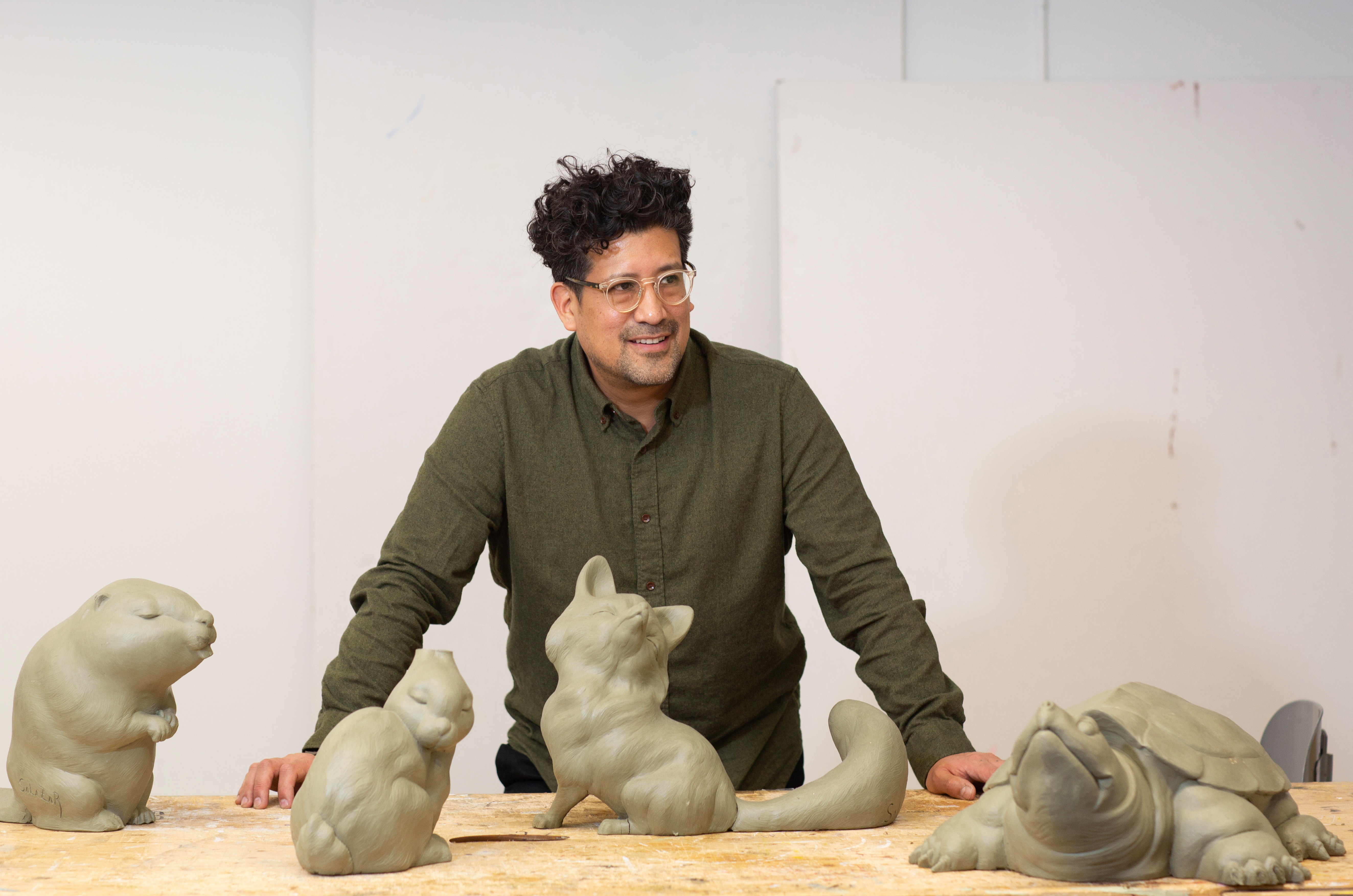
Instructor David Constantino Salazar
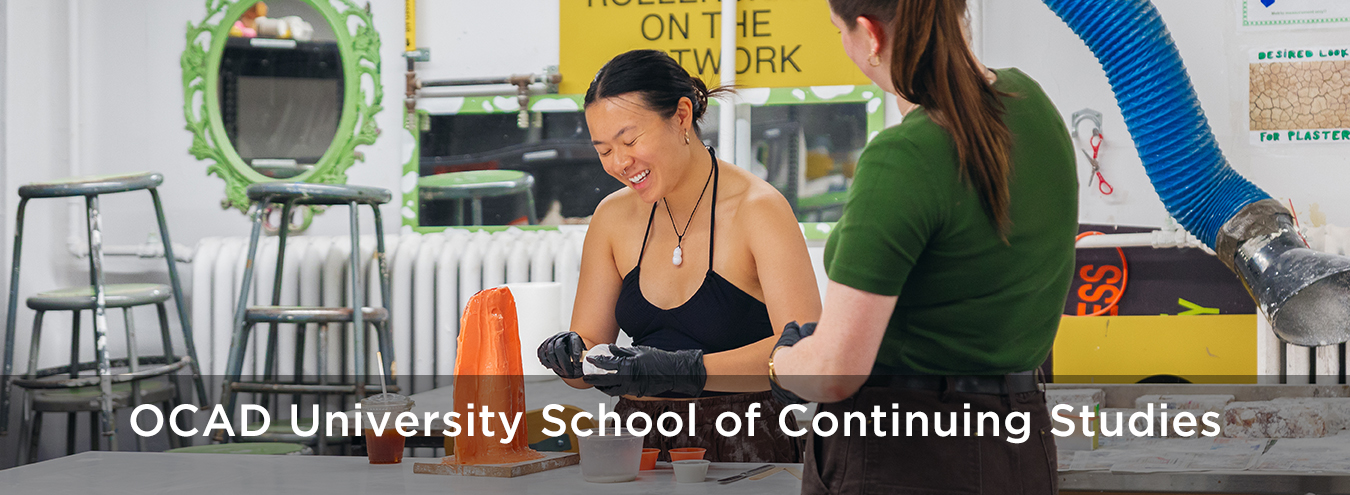
David Constantino Salazar teaches Sculpting in the Park: Observational Sculpture from Life. This in-person studio course introduces students to observational sculpture through studies in a public park setting. Working directly from life, students will observe animals or birds at rest and in motion and translate gesture, balance, and proportion into small scale oil-based clay sculptures. Register today!
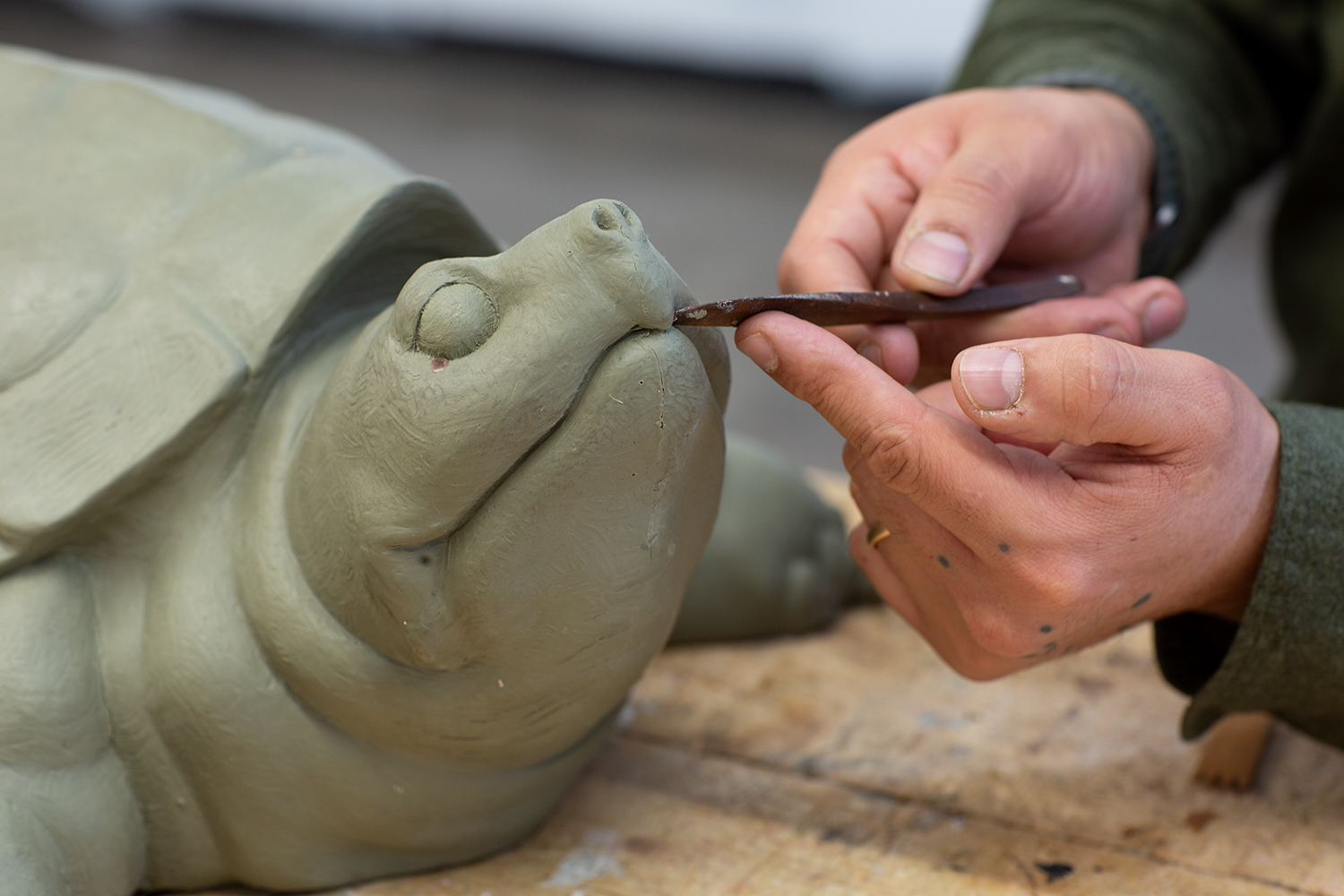
Turtle, Clay, 2025, OCAD University, Toronto. © David Constantino Salazar. Photograph by DNA Photography.
Could you briefly explain what this course encompasses and why it is relevant today, particularly considering widespread technologies such as 3D printing?
This course focuses on observational sculpture through direct study of domesticated animals and urban wildlife in a public park setting, with those studies carried into the studio. In my own practice, I work from live observation, photos, and video to understand anatomy in motion.
Students will observe animals and develop small-scale clay maquettes that explore gesture, balance, and proportion. They are introduced to a structural approach to building form, beginning with a stand-alone armature that reflects the underlying skeletal logic of the animal, and developing volume in a way that preserves movement and articulation.
While technologies like 3D printing offer precision from computer modelling to print, their creation still rely on a strong understanding of form. In my experience, digitally rendered models often benefit from refinement through hand-modeling after printing or once enlarged. What reads clearly at a small scale doesn’t always translate directly when expanded.
This course addresses that gap by grounding students in the fundamentals of representation from life. It emphasizes the maquette as a critical stage, capturing energy and intention early on, which can carry forward into larger sculptural work. For those working digitally, this stage builds an embodied understanding of form that can inform how models are constructed and resolved in virtual space. It is not positioned against technology, but alongside it, strengthening how we observe, interpret, and build form.
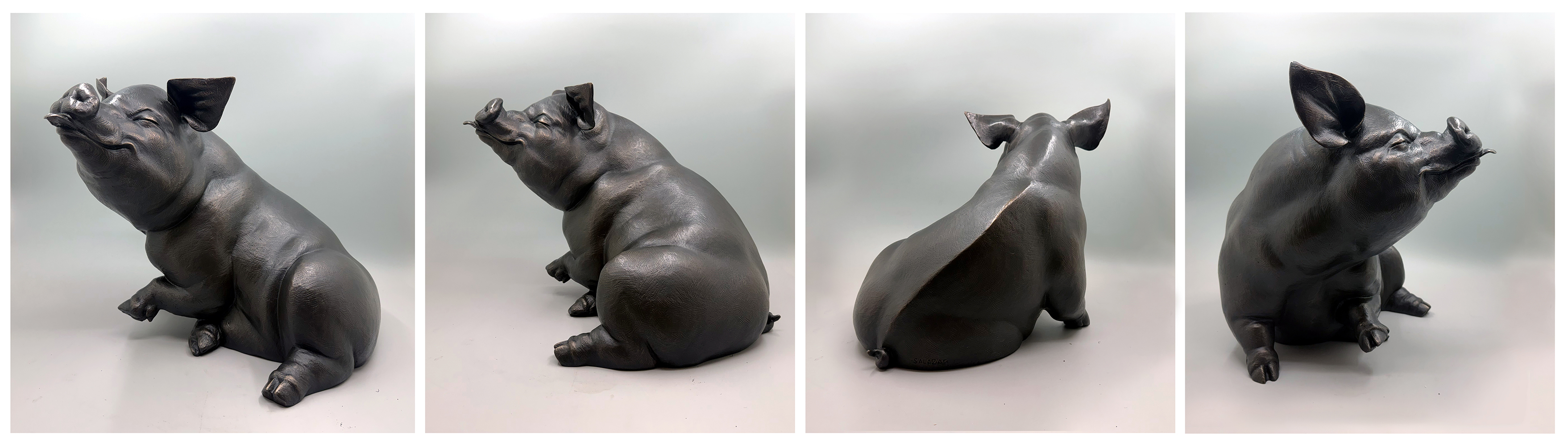
Hogtown, Cast Bronze, 2020, Toronto. © David Constantino Salazar.
What kinds of techniques do you teach in this course?
Students are introduced to the fundamentals of observational sculpture, including gesture, mass, balance, and proportion, while also understanding how subtle exaggeration of anatomy can help communicate movement, tension, and character without losing structural integrity. At times, this exaggeration can suggest narrative, where a shift in proportion or posture begins to anthropomorphize the form and influence how we read emotion or behaviour.
Working in oil-based clay, students learn how to quickly translate what they see into three-dimensional studies.
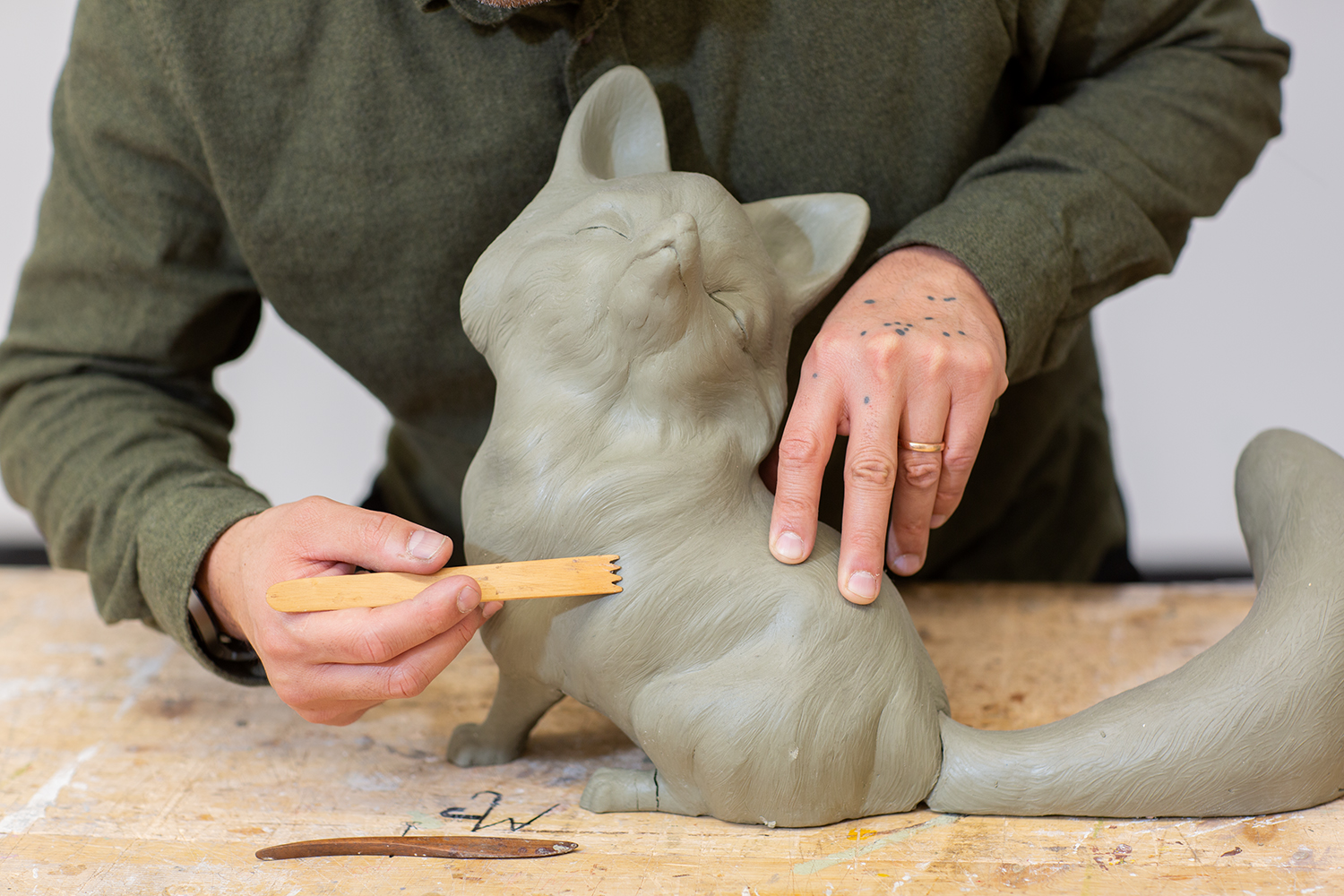
Fox, Clay, 2025, OCAD University, Toronto. © David Constantino Salazar. Photograph by DNA Photography.
The course includes demonstrations, guided exercises, and individual feedback. We work outdoors observing animals in real time, and indoors when needed, using stand-alone wire armatures. The armature is fundamental, it supports structure, helps distribute mass, and allows the sculpture to hold its form without constantly fighting gravity.
As students develop multiple studies, they begin to explore how these forms relate to one another, introducing interaction, composition, and social dynamics. A single study can evolve into a group, where new forms and narratives emerge.
A key focus is learning how to simplify. These are studies, not finished works. The emphasis is on observation, responsiveness, and building confidence through making.
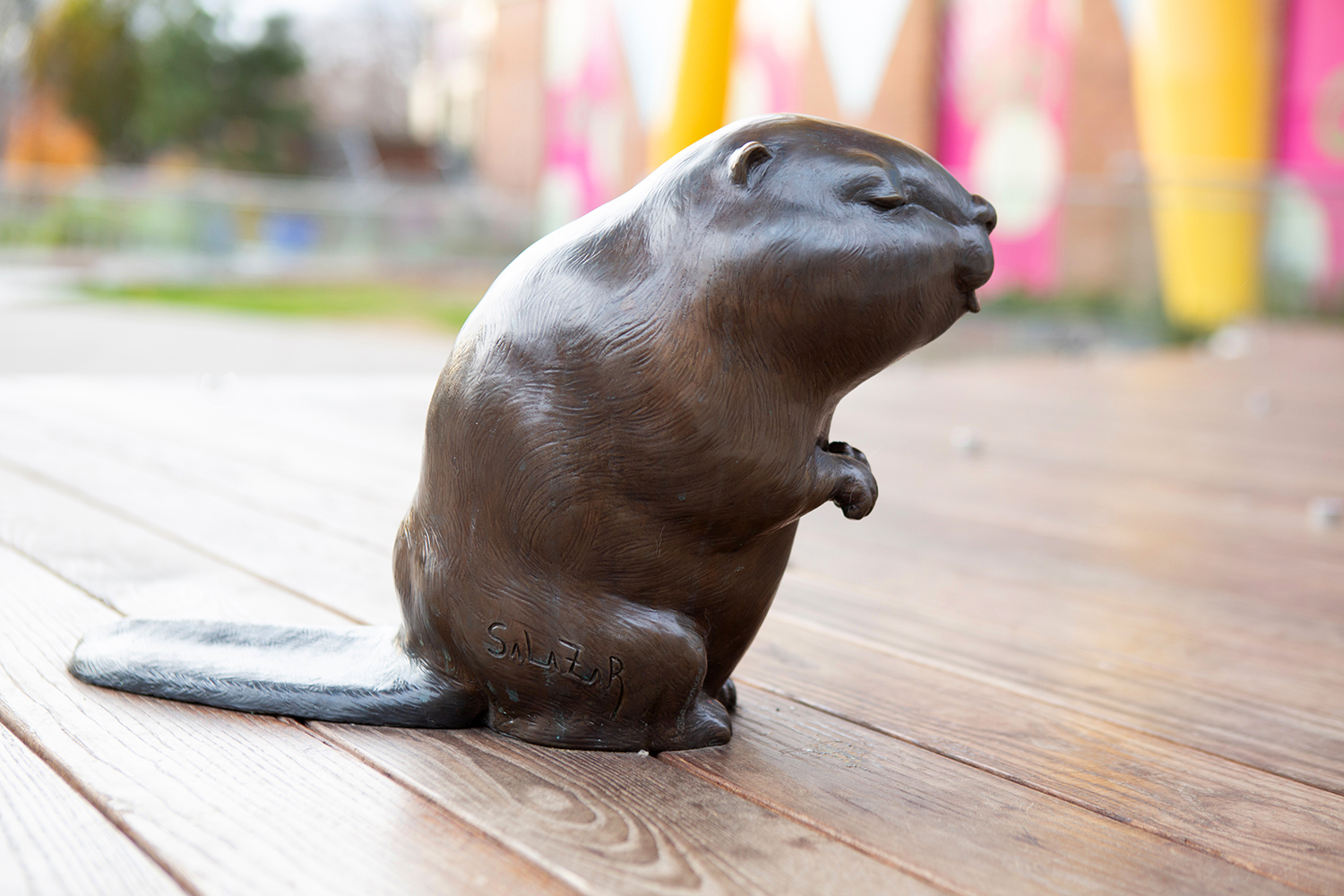
Beaver, Cast Bronze, 2025, OCAD University Butterfield Park, Toronto. © David Constantino Salazar. Photograph by DNA Photography.
Who could benefit from taking this sculpture course?
This course is open to beginners as well as those with some prior experience in sculpture, drawing, or related practices. It is well suited for individuals interested in developing observational skills and working with their hands in a focused, supportive environment.
It can also benefit artists and designers who primarily work digitally and want to strengthen their understanding of form through physical making. Because the course is process-based, it supports a range of experience levels and encourages students to develop their own approach through observation and repetition.
Anyone interested in how attention, environment, and material come together in sculptural practice would benefit from this course.
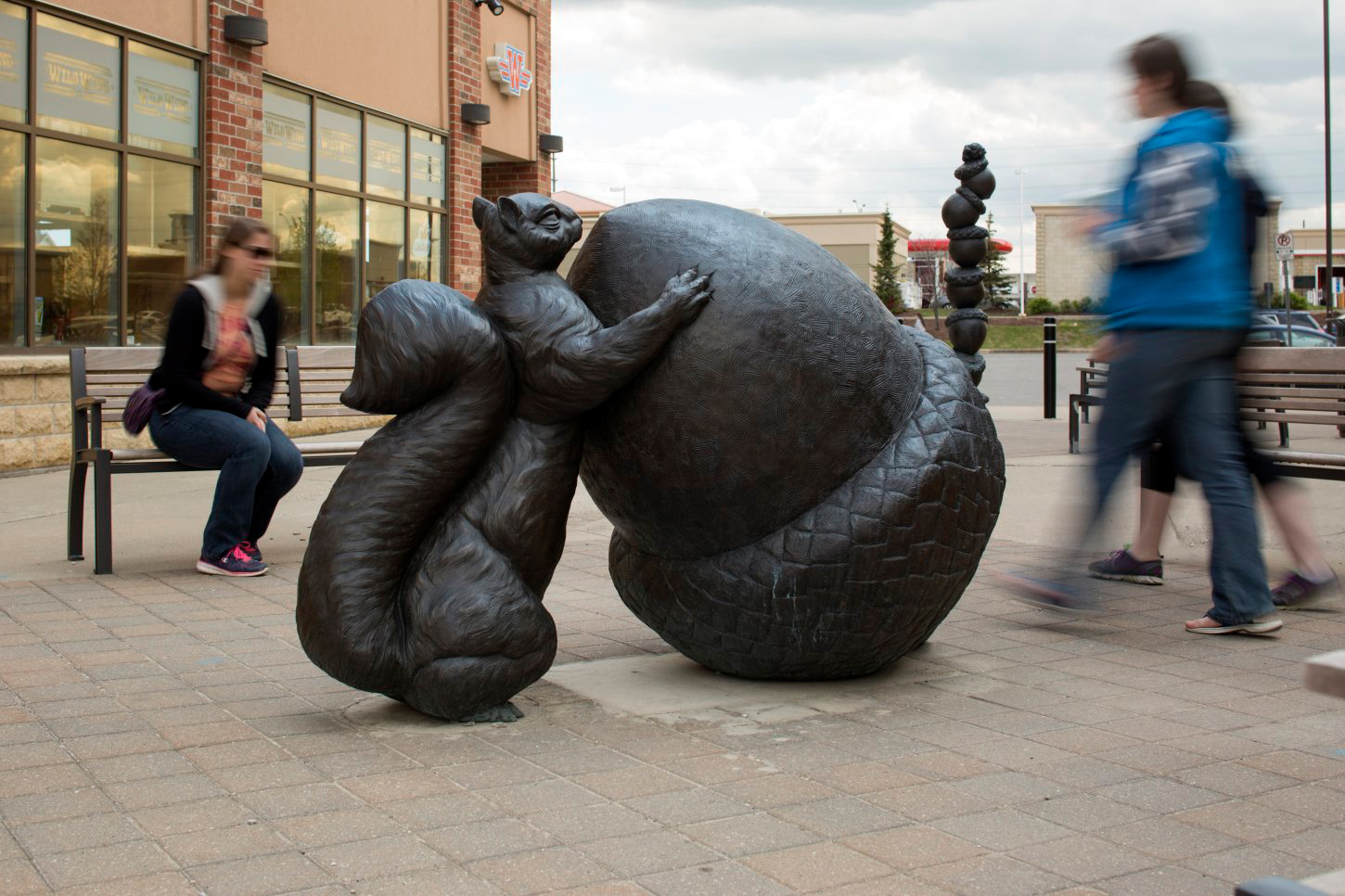
One in All, Cast Bronze, 2015, Georgetown, Ontario. © David Constantino Salazar.
What would you say defines a good sculpture?
A good sculpture communicates a sense of presence. It holds weight, balance, and intention in a way that feels convincing, even when it is minimal or loosely resolved.
In observational work, this comes down to understanding structure and gesture rather than focusing on surface detail. Observation is key, often more important than the act of sculpting itself.
“Economy” in sculpture means knowing what to include and what to leave out. Not every detail needs to be resolved. Capturing movement, energy, and proportion is often more important than finishing a surface. Early studies, often built on simple armatures, carry important information. They capture a sense of life, and that initial energy can later inform larger, more developed sculptures.
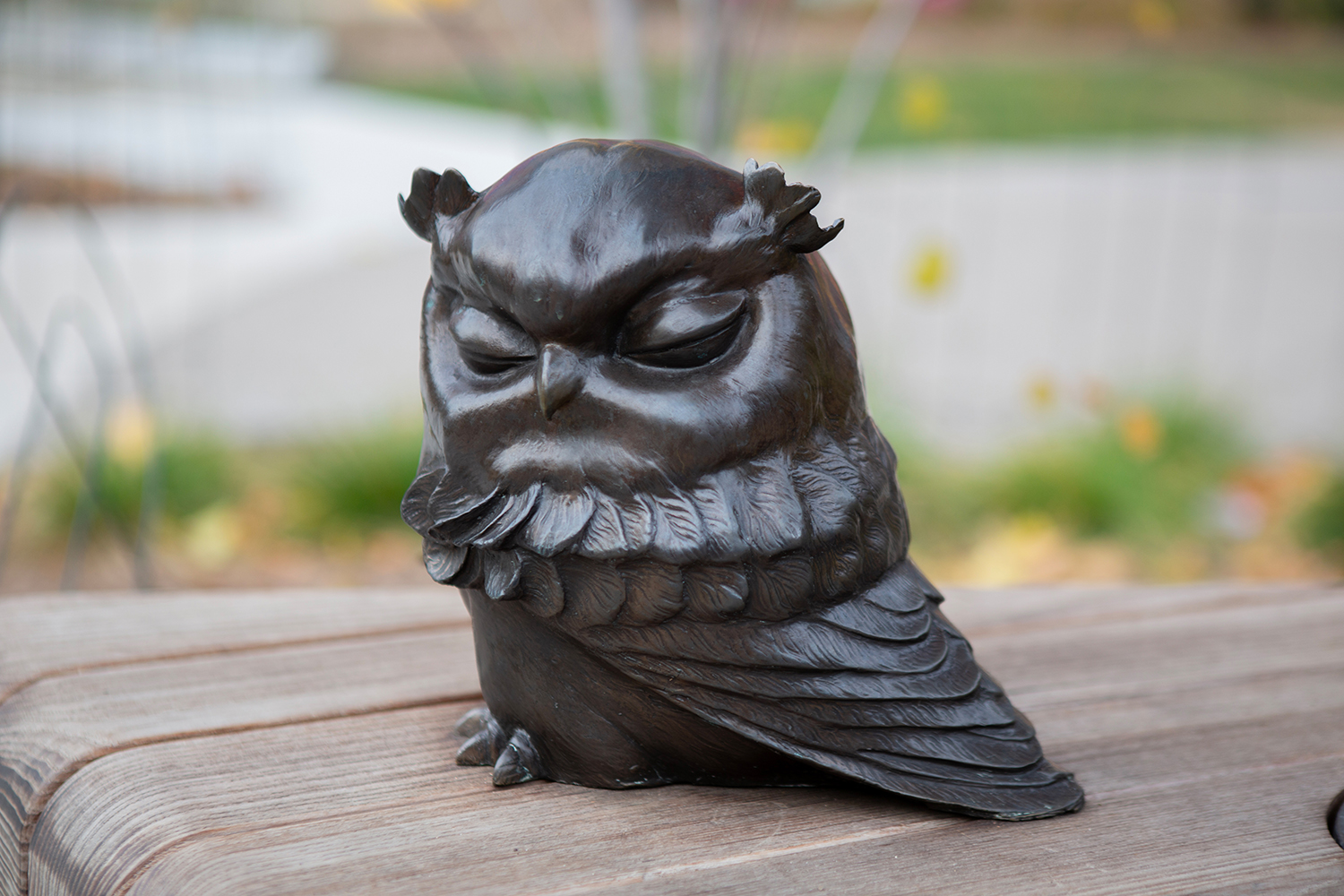
Owl, Cast Bronze, 2025, OCAD University Butterfield Park, Toronto. © David Constantino Salazar. Photography by DNA Photography.
What are some upcoming projects you are working on or looking forward to developing?
I am currently developing new sculptural work alongside teaching, including a solo exhibition at the John E. Anderson Exhibit Gallery in Pickering and ongoing public art projects. These works continue my exploration of animal and human forms through clay and bronze.
My studio practice closely relates to the course I am teaching at the School of Continuing Studies. I often begin with observational studies and maquettes, which are then developed further through fabrication processes. I have also been integrating digital tools such as 3D printing, while continuing to refine forms through hand-modeling in clay.
This approach to representational sculpture, grounded in observation, material, and process, has recently been recognized through my inclusion in the Homo Faber Guide, an international platform highlighting excellence in craftsmanship.
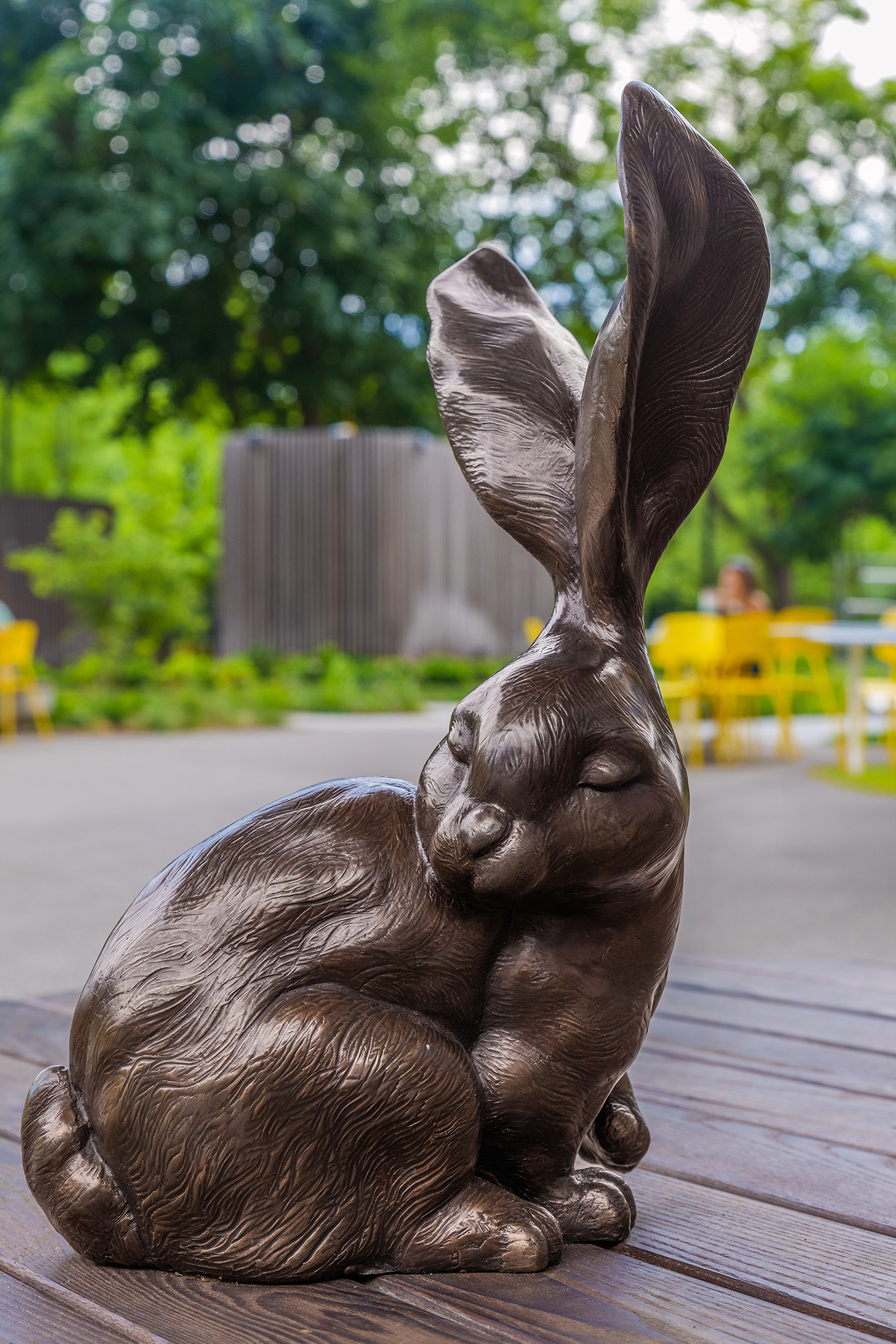
Rabbit, Cast Bronze, 2025, OCAD University Butterfield Park, Toronto. © David Constantino Salazar. Photograph by Brian Medina.
—
Websites:
dcsalazar.com
homofaber.com/david_constantino_salazar
Instagram:
@dc.salazar